
The Milner Field Walk is an 8.3-mile circular route from Bingley town centre, taking in the River Aire, ancient woodland, open moorland and the Leeds and Liverpool Canal. The walk’s centrepiece is the hauntingly beautiful ruins of Milner Field Estate – the lost Victorian mansion of Titus Salt Jr, whose story of grandeur and misfortune is one of West Yorkshire’s most fascinating. The route is graded moderate and suits confident walkers: you will earn your views here, with several climbs including a long pull up onto the moor above Gilstead. But the rewards, from the Milner Field ruins to the panoramas over the Aire Valley, more than justify the effort. Along the way you will cross six bridges, pass through four distinct woodlands, climb to almost 200 metres above sea level, and barely lose sight of Bingley throughout. Allow around 4 hours.

Gate and entrance to the Milner Field Estate from North Lodge
Plan your walk
Where to start?
Bingley Arts Centre
Main Street
Bingley
West Yorkshire
BD16 2LZ
Grid Reference: SE 106 390
What3Words: ///sprint.colonies.downfield
Bingley Railway Station is only a step away from the start of this walk making it a car-free train walk! We encourage walkers to use public transport, rather than cars, as much as possible.
We have provided an interactive map below, powered by OpenStreetMap. You can zoom in and out, explore the route in detail, follow your live location along the walk, and view points of interest, cafés and facilities directly on the map.
Elevation profile

Route files for GPS & mapping apps
Find out more about these downloadable files and how to use them


Toilets & Refreshments
There are public toilets on this walk and are located on Myrtle Place (by the market square) in Bingley.
There are many shops, cafés, restaurants and pubs in town but below are specifics businesses which we recommend if you go on this walk. Feel free to visit their site and contact them.

Cosy café serving all-day breakfasts, butties, homemade soups, gourmet burgers and classic comfort food!
A café located near the Five Rise Locks. A great break almost at the end of the walk.
This little quirky pub is a great place to finish this walk in style. It is one of the true hidden secrets of Bingley!
Directions - Milner Field Walk: Bingley's Hidden Secret
Last edited: 23rd April 2026
1. Bingley town centre to Shipley Golf Course
Start at Bingley Arts Centre on Main Street. With the Arts Centre in front of you, go left towards the Bingley Town Council Hub building. Before you reach it, turn right and cross the car park to arrive on Myrtle Place. Look for the track near the entrance of the Wishing Well Nursery. Walk up the track, which will run behind the former Bingley Town Hall building. Follow this through and you’ll emerge into the back of Myrtle Park, arriving near the basketball court. From here, go downhill and through the park towards the River Aire.
Go towards the old green tubular steel pedestrian bridge, known as the Festival of Britain Bridge. Once over, go straight up towards the woodland where you will start climbing a flight of stairs. At the top, bear left up the bank and follow the path as it climbs away from the river. When you arrive at the end of the woodland, pass through the gap in the wall and immediately turn right just before the house. Follow the path leaving the property, then turn left and walk down the narrow Beckfoot Lane towards a small settlement.
Just after the last house, turn right on a path and cross the Harden Beck river on a small bridge to find yourself on Shipley Golf Course. Cross this section carefully watching for the balls and just follow the white stones up to a stile and a field. Bear left towards a pine tree plantation. Look back at the breathtaking view over the Harden Valley just before getting in the plantation!

This footbridge over Harden Beck connects Beck Lane to Shipley Golf Course

View of the Harden Valley from bottom of Ruin Bank Wood plantation
2. Ruin Bank Wood and down to Cottingley
You are now entering Ruin Bank Wood, and the path continues to climb. This short but steady ascent – rising to around 150 metres – takes you deeper into the trees, and the noise of Bingley fades further behind you. The woodland here feels noticeably wilder and more enclosed than the riverside path you have just left.
Follow the steep track up through Ruin Bank Wood to a fence marking the entrance to a scouts hut, where you turn left and follow a path along it. Soon you will pass through a clearing within Cottingley Wood Estate – the trees have grown considerably in recent years so the opening is less dramatic than it once was – with glimpses of Baildon Moor on the horizon. Follow the track to its end, where you arrive on Beckfield Road and turn left.
At the end of Beckfield Road is the entrance to a private house, but there is a public footpath hidden on the left. This path is rough with large rocks and exposed roots, so take care walking down. At the bottom, turn right onto Manor Drive and shortly after turn left onto a path alongside a house. You are now on Ghyll Wood Drive. This steep road will take you down to Bradford Road.

The Cottingley Wood Estate is a tree plantation near Bingley crisscrossed by several paths

Rough Path in Cottingley between Beckfield Road and Manor Drive
3. Along the River Aire to Hirst Lock
Carefully cross Bradford Road, then turn left towards Bingley. Just before Cottingley Bridge, look for an opening in the wall on your right – this brings you down onto the riverside path along the River Aire. From here, stay close to the river and don’t leave it until you reach Hirst Woods. It’s a peaceful, flat stretch that makes a welcome contrast to the steep descent you’ve just completed.
Along the way you’ll pass the Bradford and Bingley Bees RUFC training ground on the opposite bank. Shortly after, pass under two bridges in quick succession: first the broad concrete pylons of the modern Bingley bypass, then the elegant Victorian steel structure carrying the Leeds to Morecambe railway line. The second bridge marks the entrance to Hirst Woods.
Once under the railway bridge, bear right and follow the path up into the woods. The trees here are beautiful at any time of year, but particularly so in autumn. Follow the path through Hirst Woods and it will bring you out at Hirst Lock on the Leeds and Liverpool Canal.
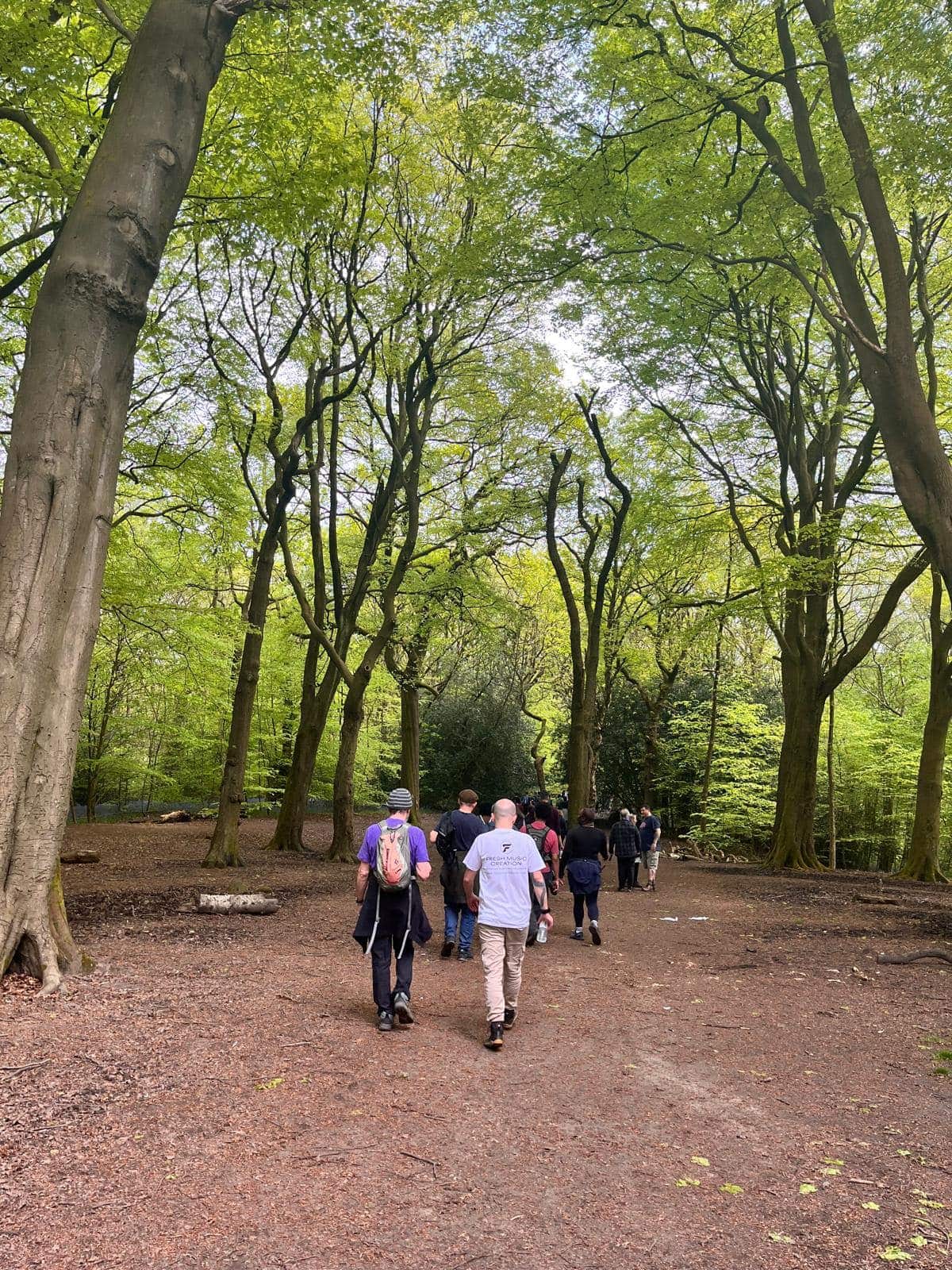
Hirst Wood is one of Bingley's Hidden Secrets
4. The Milner Field Estate
Cross the Leeds and Liverpool Canal swing bridge and towpath straight onto Hirst Mill Crescent, keeping the derelict nursery on your right. Turn right at the back of the nursery, then turn left to cross the River Aire once again using another green tubular steel footbridge.
Saltaire‘s iconic Victorian mills will come into view on your right – a reminder that this entire landscape was shaped by the ambitions of one remarkable industrial dynasty. After the bridge, turn left onto a footpath leading towards the Bradford Amateur Rowing Club. Cross Loadpit Beck on the footbridge and turn right onto the track – you can admire the old Hirst Mill across the River Aire weir from here.
At the end of the track, turn left onto Higher Coach Road, and you will soon find yourself entering the Milner Field Estate. This is the highlight of the walk, and one of the most atmospheric spots in the whole of the Aire Valley. Milner Field was built in 1873 for Titus Salt Jr, son of the great Victorian philanthropist Sir Titus Salt who created Saltaire. The mansion was grand, eccentric and famously cursed – every family who owned it seemed to meet with misfortune – and by the mid-twentieth century it had been demolished, leaving only the ruins you see today. South Lodge and North Lodge, the two ornate gatehouses, are the most substantial remains still standing, but as you walk through the estate look carefully at the ground beneath your feet: the intricate floor mosaics from the original house are still visible, quietly outlasting the building they once adorned. Take your time here. It is easy to walk through quickly, but the ruins repay a slower pace – there is more to find than first meets the eye.
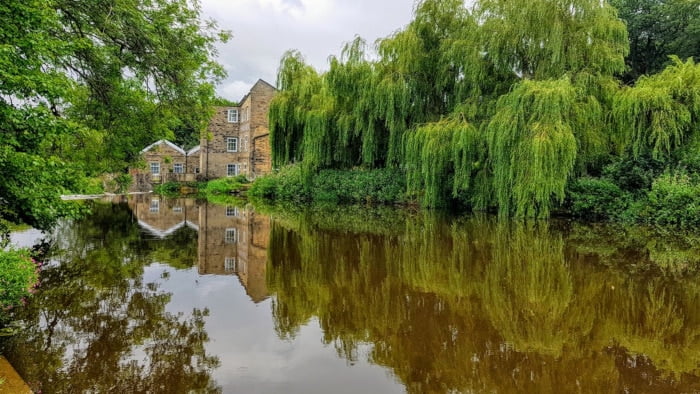
Reflection of willow trees in River Aire near Hirst Weir during Summer - Photography by Wendy Biswas
Gate and entrance to the Milner Field estate from North Lodge
5. Through Gilstead and up to the moor
Once through the gate at North Lodge, cross the road and turn right, going uphill towards Gilstead village. As you go up Primrose Lane, look for the blue plaque affixed to one of the houses on the left-hand side. This plaque marks the birthplace of Sir Fred Hoyle in 1915, a renowned astronomer credited with coining the term “Big Bang". At the end of the road, turn left towards Gilstead St Wilfrid’s Church, then cross the road carefully to reach the other side. Walk towards Bingley, then turn right onto Pendle Road and left onto Rombalds Drive. At the end of it, you will enter Gilstead Moor.
Take the path that runs along the right-hand side of some buildings – the former Yorkshire Water pump house – and at the fork, go straight through a line of trees and uphill on a small path, which will bring you out onto an open field. Cross the field to rejoin a track, then bear right towards the houses perched above. The track becomes a path within a small woodland and runs along the fences of the houses for a while. It can be a little tricky underfoot in places, so watch your step. Soon the path opens out onto open moorland, with the houses still on your right. The views across the Aire Valley from here are fantastic. Carry on uphill until you find a signpost pointing to a path between the houses. Take that path and you will arrive on Grange Road.

Heather in full bloom on Gilstead Moor near Bingley - Photography by Wendy Biswas

Gilstead Moor above Bingley has some beautiful moorlands areas
6. Prince of Wales Park, Five Rise Locks and back to Bingley
Turn left onto Grange Road and follow it until you reach a bend where you will see the entrance to a track, which will lead you to the top of Parkside. Cross carefully to enter Prince of Wales Park. Walk through the park to the other side and find the Fernhill entrance going down to Lady Lane.
Cross the road carefully, turn right and look for the snicket just before Oakwood Drive. This will lead you onto Spa Lane and Gawthorpe Drive, which features Gawthorpe Hall – the oldest building still standing in Bingley. Go down some steps into another snicket and you will find yourself on Beck Lane.
From there, turn right and walk along the allotments up to a mini-roundabout. Turn left and follow the road all the way to Five Rise Locks. You can take a well-earned break at the Five Rise Locks Café. There is lots to see and do around the locks – see our page about the Bingley Five Rise Locks Walk.
To return to the town centre, follow the towpath down past the locks and cross the bypass using the pedestrian bridge just after the Three Rise Locks. You should see All Saints Church on your right. Cross Main Street safely at the light-controlled crossing and walk towards Millgate and Ireland Bridge. Once you have passed the Curio Cottage, turn left to join the Riverside Walk. Follow it all the way along until you reach a plaque in the ground inscribed with the words “Throstle’s Nest of England". On your left, a flight of stairs leads up to the street, and at the top you are back near the Arts Centre. Take a moment to admire the lovely old Market Place and the buttercross building as you reach the end of the walk.
Interesting fact: this walk was featured on the Walkers are Welcome launch event on 11th April 2015.

Alternative entrance in Prince of Wales Park up Fernhill Road

Opening of the top gates at the Five Rise Locks - Photo by Kath Gabbitas
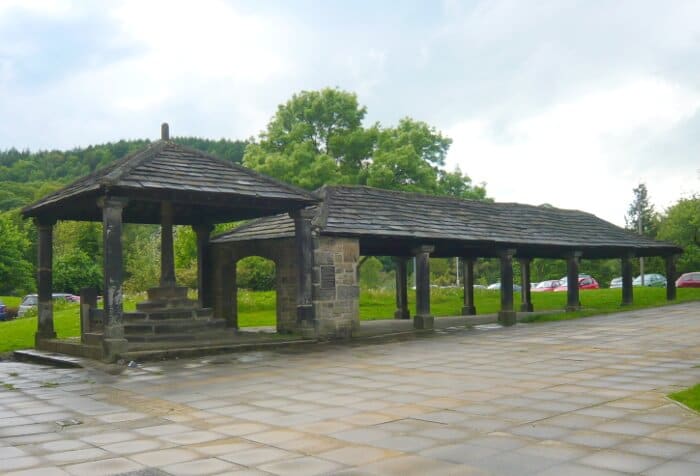
View of the old covered market hall and Buttercross - Photo: Regine Geldhof
Frequently asked questions
Is there parking near the start of the walk?
The walk starts and finishes at Bingley Arts Centre on Main Street. There is a small car park at the Arts Centre itself, but several public car parks are within a short walk of the start, including the Queen Street Car park. However, Bingley Railway Station is just a few minutes’ walk from the start, making this an ideal car-free train walk. We encourage walkers to use public transport where possible.
Is the Milner Field Walk suitable for dogs?
Much of the Milner Field Walk passes through dog-friendly terrain – the riverside path along the Aire, Gilstead Moor, the Leeds and Liverpool Canal towpath, Prince of Wales Park and the Milner Field Estate itself are all great for dogs. However, at 8.3 miles this is a long walk, so consider whether your dog is fit enough for the full distance before setting out. Dogs must be kept on a lead on Shipley Golf Course, and care should be taken near the several river crossings on the route. For more dog-friendly walks and places in Bingley, visit our Dog Walks & Dog Friendly Places in Bingley page.
Who was Titus Salt Jr?
Titus Salt Jr was the youngest son of Sir Titus Salt, the Victorian industrialist and philanthropist who built the model village of Saltaire near Shipley in the 1850s. Where his father was celebrated as one of the great philanthropists of the age, Titus Jr was widely regarded as the son most likely to inherit his father’s business acumen and public spirit – and he largely lived up to that reputation, playing a major role in the development of Saltaire’s schools and public amenities.
In 1867, within a year of his marriage to Catherine Crossley, he purchased the Milner Field Estate – 161 acres of land above Saltaire near Gilstead in Bingley – and commissioned architect Thomas Harris to design a grand new house on the site. The mansion became one of the finest private residences in the West Riding of Yorkshire, complete with extensive conservatories, landscaped gardens, a model farm and a trout lake.
Titus Jr died suddenly at Milner Field on 18 November 1887, aged 44, having just hosted Princess Beatrice and Prince Henry of Battenberg at the estate earlier that year for the opening of the Royal Yorkshire Jubilee Exhibition. He is perhaps best remembered for his tireless work promoting education in Saltaire – the Exhibition Building, now part of Shipley College, stands as his most enduring legacy.
Why was Milner Field said to be cursed?
The curse of Milner Field is one of West Yorkshire’s most compelling and well-documented legends – and the facts speak for themselves.
Titus Salt Jr died suddenly in the billiard room at Milner Field in November 1887, just six months after hosting Princess Beatrice at the estate. His widow Catherine eventually sold the house and the family business in 1903 to textile baron Sir James Roberts. In the fourteen years that followed, Roberts lost three of his four sons to illness or accident, saw his fourth son badly injured in the First World War, and then lost his pregnant wife Elizabeth to the Spanish Flu epidemic of 1918.
The next occupants fared no better. Salts Mill managing director Ernest Gates and his wife Eva moved in shortly before Mrs Gates succumbed to an unknown illness in October 1923 – only weeks after arriving. Ernest himself died of septicaemia in April 1925. His successor as managing director, Arthur Hollins, moved into Milner Field with his wife Anne in May 1925. Anne was dead from pneumonia within nine months, and Arthur died suddenly on holiday in August 1929 – aged fifty-one, precisely the same age as Ernest Gates had been at his death.
The Hollins family were the last people to live at Milner Field. The house was eventually abandoned, stripped of anything valuable, and demolished in the mid-1950s using bulldozers and dynamite. The ruins you walk through today are all that remain.
Can you still see the ruins of Milner Field?
Yes. While the main house was demolished around 1950, a surprising amount survives for those who look carefully. South Lodge and North Lodge – the two ornate gatehouses that once marked the entrances to the estate – are still standing and in reasonable condition. Within the grounds, the intricate floor mosaics from the original house are visible underfoot, and various structural remnants can be found among the vegetation. The ruins are passed through on Section 4 of the walk, and we strongly recommend taking your time here rather than passing straight through. The more slowly you walk, the more you will find.
Have you done this walk yourself? Don’t hesitate to give us some feedback by leaving a comment below!
Peter Creek
We did this walk on 19th June. It took nearly 5 hours as the directions are so vague and some of Bingley’s hidden secrets remain hidden as we never found them. However Ruin Hill Wood & Hirst Wood are lovely.
Bingley WaW
Hi Peter, very sorry to hear this. We must admit this was one of the first walks we uploaded to the site and it probably needs a good review. Thank you for your feedback and we will get back to you once we have reviewed the walk.
Peter Creek
We had a second attempt at this walk on 6th November. The weather was cold and dull. However the woods were spectacular with the wonderful autumn colours. Picnicked at Hurst Lock & finally found Gilstead Crag this time around – amazing views from the top. A welcome cup of tea at 5 Rise Locks Cafe fortified us for the walk back to the station in Bingley.
Bingley WaW
Thank you very much Peter for trying it again. I’m glad you managed to find those hidden gems. Gilstead Crag is definitely one of my favourite’s spots.